
Equine Acupuncture
What is acupuncture and how can it benefit my horse?
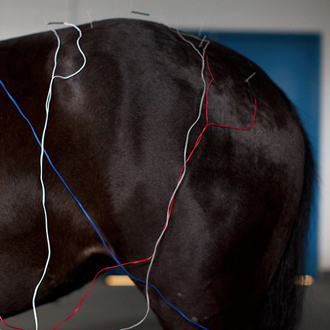 Acupuncture is an ancient Chinese form of medicine that focuses on balancing the body’s energy to promote health and healing. The Chinese refer to this energy as Qi (pronounced ‘chee’) and view it as the life force of all beings. The flow of this energy throughout the body, if disturbed, results in disease. Electro-stimulation, moxibustion, hemoacupuncture, aquapuncture and dry-needling are methods of stimulating and restoring the flow of Qi. Whatever the technique used, the goal is to restore the free flow of Qi, balance and function. Once the body is “balanced” it is more resistant to disease, fatigue and stress induced damage.
Acupuncture is primarily used in sport horses to control pain and restore function. In Eastern terms, pain results from the blockage of Qi. Where there is Qi stagnation, there is pain. Acupuncture stimulation resolves this blockage, opens the meridian channels allowing the free flow of Qi and inducing the healing process. Modern research shows that acupoints are in areas where there is a high density of free nerve endings, mast cells, small arterioles and lymphatic vessels. Acupuncture stimulates nerve impulses that travel via the spinal cord to the brain to elicit a physiologic response.
Horses are uniquely sensitive to acupuncture and are the only species where a diagnostic “scan” identifies specific areas of pain and discomfort. Acupuncture stimulates neuroendocrine responses via the same somato-somatic and somatic-visceral neural reflexes used to regulate normal physiological processes and heal the body. Because of these neural reflexes, sensitivity of specific acupoints have been observed to indicate disease locally, elsewhere along the Channel and of specific organs. The acupoints can be used for both diagnosis and treatment.
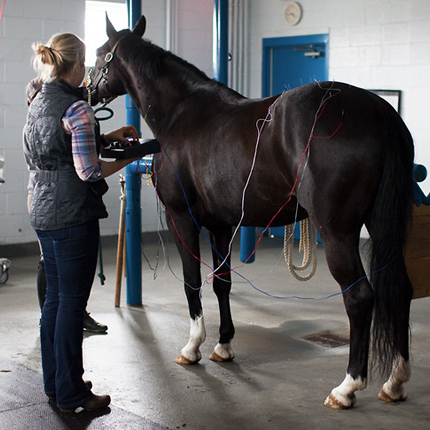
Even low-grade soreness can cause a horse to jump hollow, shorten its stride or become resistant to training. Back pain, neck pain, muscle soreness and fatigue are common factors contributing to lameness and poor performance in the sport horse that can be treated with acupuncture.
In addition to musculoskeletal ailments, acupuncture can be used for any type of disease or condition and is especially helpful for those conditions for which traditional Western medicine has no cure or diagnosis. Acupuncture can be used for horses of any age, from foals to geriatrics and may be used to treat disease or promote overall health. Conditions for which it is most utilized include: neurologic disorders including EPM, laryngeal hemiparesis, and Wobblers, allergies, heaves, anhidrosis, infertility, gastrointestinal conditions including diarrhea, colic, ulcers, geriatric weakness, uveitis and skin disease/dermatitis. Each session usually takes 30-60 minutes and conditions often respond within 3 treatments. Traditional Chinese Veterinary Medicine is provided only by licensed veterinarians.

Spinal Manipulation for Horses
Expert Care to Support Comfort, Performance & Mobility
Spinal manipulation is a hands-on technique used to assess and correct dysfunction within your horse’s spine and musculoskeletal system. This therapy focuses on identifying areas of restricted movement in the joints of the spine and pelvis and restoring normal motion through precise, gentle adjustments.
What Is Spinal Manipulation?
Spinal manipulation involves evaluating the alignment, flexibility, and motion of your horse’s spine. When a joint becomes restricted or misaligned, it can affect surrounding muscles, nerves, and overall biomechanics. Using controlled and targeted manual adjustments, a trained veterinarian helps restore normal joint mobility, reduce tension, and support the horse’s natural ability to heal.
Benefits for Your Horse
Spinal manipulation may help:
-
Improve Comfort & Reduce Pain
Adjustments can ease muscle tension, joint stiffness, and discomfort associated with back or neck issues. -
Enhance Performance
Proper spinal alignment allows your horse to move more freely and efficiently, often improving gait, flexibility, and overall athletic ability. -
Support Recovery From Injury
By improving mobility and reducing compensatory strain, spinal manipulation can play a supportive role in rehabilitation plans. -
Increase Range of Motion
Restoring normal joint function helps your horse bend, flex, and engage properly—whether in daily work or sport. -
Promote Overall Well-Being
Many horses show improved attitude, relaxation, and willingness to work after treatment.
When Might Your Horse Benefit?
Spinal manipulation may be recommended if your horse shows signs of:
- Changes in performance
- Stiffness or resistance under saddle
- Difficulty bending or collecting
- Uneven gaits or shortened stride
- Behavioral changes that may indicate discomfort
- Localized back or neck soreness
A Safe, Professional Approach
Our veterinarians are trained in equine spinal manipulation and incorporate it into a comprehensive care plan tailored to your horse. We work closely with owners, trainers, and other professionals to ensure each horse receives safe, effective, and individualized treatment.
Functional Electrical Stimulation (FES) for Horses
Advanced Muscle Therapy Offered by Our Veterinary Team
Functional Electrical Stimulation (FES) is a non-invasive therapeutic treatment that uses low-voltage electrical impulses to gently stimulate targeted muscle groups in your horse. These controlled impulses create rhythmic muscle contractions and relaxation, helping to improve muscle function, circulation, and overall comfort.
During an FES session, small electrodes are placed on the skin over specific muscles. The stimulation feels similar to a deep, soothing massage for the horse, and no sedation is required. This makes FES an excellent option for horses in training, rehabilitation, or recovery from injury.
What FES Helps With
A well-balanced horse is stronger, healthier, and more capable under saddle. A more balanced athlete can improve stride, jump power, movement, and overall comfort.

Benefits of FES sessions for Horses:
- Improve muscle symmetry – activating both sides evenly for balance and alignment.
- Build strength and flexibility – engaging deeper muscle groups without added stress on joints.
- Support long-term performance – keeping your equine athlete ready for their next challenge.
- Muscle atrophy & weaknessvSupports rebuilding and maintaining muscle mass, especially when a horse is out of work due to injury or surgery.
- Pain & inflammation – Improves blood flow, reduces inflammation, and helps relieve discomfort in the back, neck, or other affected areas.
- Rehabilitation & performance – Enhances muscle quality, topline development, and range of motion, supporting both recovery and improved athletic performance.
Why Choose FES for Your Horse?
FES offers a safe, comfortable way to support healing, maintain muscle health, and complement other veterinary treatments. It is suitable for horses of all ages and disciplines and can be customized to fit your horse’s individual needs and goals.
In addition, we are experienced with another time-honored treatment:
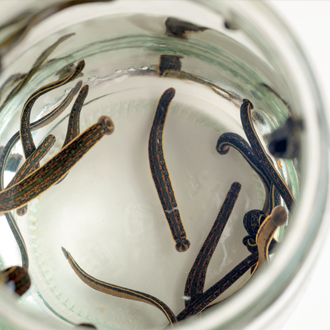
Hirudotherapy (Medicinal Leeches)
The primary use of Medicinal Leeches is for reducing swelling and blood stasis from injury and they are used in human medicine as an adjunct in skin and limb grafting surgery. In equine sports medicine, the technique is very useful for reducing pain, swelling and inflammation in acute and chronic tendon and ligament injuries, as the leeches saliva contains many factors that are anesthetic and regenerative, restoring blood flow and providing healing factors to the area.
If you are interested in these services, please give us a call today at (908) 832-5484.
Laser Therapy
Class IV Laser – Epica Artemis
The Artemis laser is one of the most powerful surgical and therapy lasers available for veterinary use. The Artemis is the only therapy laser capable of providing Rapid Inflammation Modulation (RIM) AND Non-Invasive Regenerative Therapy. This is owing to the Artemis’ proprietary laser pulse emission (QSwitched) and a wide range of energy and frequency settings. Artemis works at a wavelength of laser light that is poorly absorbed by tissues and causes a vibration of carbon-carbon bonds resulting in photomechanical cellular ‘massaging’ without generating harmful levels of heat. Laser light stimulates mechanisms within the treated cells to produce new proteins for healing.
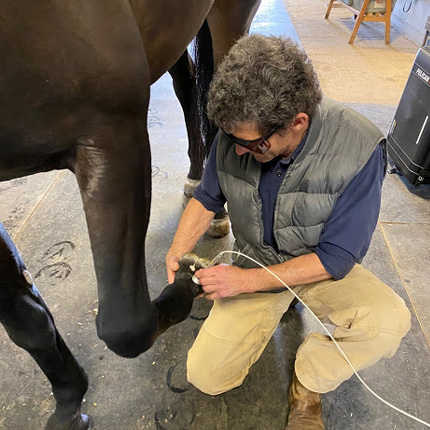
The Rapid Inflammation Modulation (RIM) setting is used to treat pain and inflammation right after injury occurs and typically uses lower energy settings and treatment times.
The Non-Invasive Regenerative Therapy setting is used to treat injuries during the healing and rehabilitation phases of injury to modulate pain, and improve the quality of the healing tissue during these critical phases.
Typical injuries that are treated with both RIM and NRT include:
- Tendon and Ligament Injuries
- Bone Bruising and Cartilage Injury
- Joint Inflammation
- Pain Relief
- Laminitis
- Wound Healing
Here is a great article about the effects of Class IV laser therapy that was published on Practical Pain Management. Read Now: Class IV Therapy Lasers Maximize Primary Biostimulative Effects
“Cold” Laser Therapy – Multi Radiance ActiVet Pro
Multi Radiance Medical’s MR4 is a compact, hand-held laser tool that combines wavelengths, light sources and electromagnetic energy, of lower power than the Class IV laser. The MR4 has wide application as it is quick easy, well-tolerated and effective for treating many acute and chronic issues.
The MR4 laser is particularly useful for treating:
- Non-healing Wounds and Summer Sores
- Relaxation (often combined with acupuncture)
- Ligament and Tendon Injuries (particularly during rehabilitation)
- Hygromas and Hematomas
- Osteoarthritis
- Post-surgical Incision Management
- Quarter Crack Pain
- Strains and Sprains
- Nerve Injuries
- Chronic Dermatitis and Decubitis Ulcers (pressure sores or boot rubs)